
Can we finally erase those painful memories of that awful hair cut?


 I became interested in the topic of literacy in children while working with a class of 5-6 year olds at the Early Childhood Center on Sarah Lawrence Campus. From the teaching standpoint, this is the age in which the foundations for literacy are laid. There is also evidence that this time is a critical period in brain development. At the ECC, teachers take a “developmental” approach to learning, believing that with encouragement and support children will learn to read at their own pace and in a natural way. Unfortunately, in our society much emphasis is placed on the speed rather than the quality of skills children acquire. As a result, many children who develop more slowly than others are quickly diagnosed with dyslexia or other disorders. How can our knowledge of the brain aid us in our understanding of how children attain literacy? Are there direct correlations between differences in the brain and level of ability? How can our growing knowledge of the structure of the brain influence the way we teach and diagnose children learning to read?
 Previous studies have used brain imaging to establish the connection between the left temporo-parietal cortex and reading ability in adults. Wandell set out to find if this connection applied to children at an age where reading skills are growing rapidly. He and his team hypothesized that similar findings in the structure of white matter in the left temporo-parietal lobe of children would indicate that these neural pathways play integral role in how we develop fluent reading. An alternate hypothesis maintained that if the finding were found to be different between children and adults of varied ability, it could suggest that many years of differential reading experiences could be the cause of structural disparity in adults.
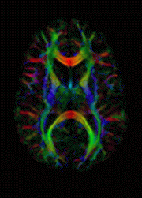 Diffusion Tensor Imaging (DTI)

 value within a voxel would indicate highly directional diffusion. Coherence Index (CI) is used to measure the overall direction of multiple adjacent voxels. High CI would reflect the agreement of fiber direction in neighboring voxels, demonstrating the existence of strong neural pathways.


 then can we say that a child must conform to a specific timeline in their learning, how can we presume that if they do not perform up to a set standard within a restricted learning style that they are mentally deficient. There are undoubtedly children who do have disabilities related to learning, but we can’t afford to generalize when to do so would be to upset such an important foundation.


 However open minded Sarah Lawrence students may be, we've all heard it before. Pink is for girls, and blue is for boys. While some have staunchly opposed this concept as an externally induced societal norm, there may actually be some biological validity to the statement.
 Results!

 Bibliography
